Flowers ›
Zebrina Mallow
Malva sylvestris 'Zebrina'
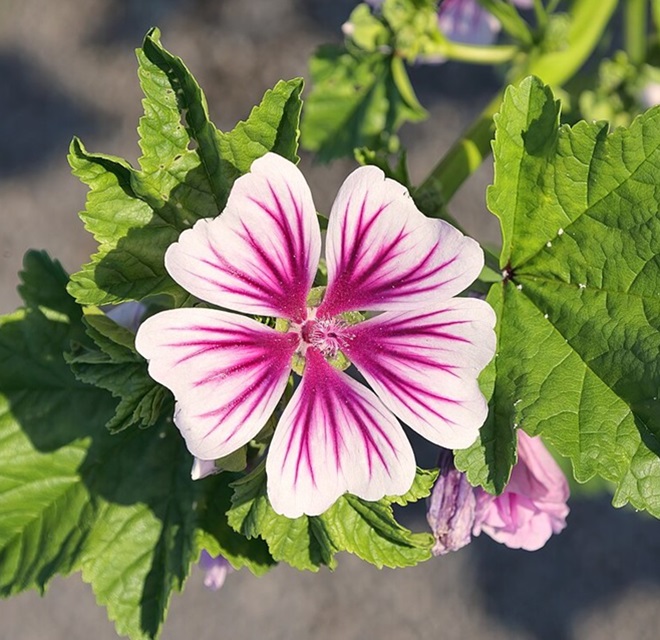
Zebrina mallow (Malva sylvestris 'Zebrina') is a selection of common mallow with flowers about 2 inches across, pale pink to almost white, striped with deep magenta-purple veins that run from the center to the petal edges. The upright, branching stems grow 2 to 4 feet tall, with rounded, shallowly lobed leaves, and they flower from early summer until frost, which is a longer season than most perennials manage.
It is a short-lived perennial, hardy in zones 4 to 8, and individual plants often last only two or three years, sometimes behaving more like a biennial. It self-sows freely, though, and the seedlings usually look much like the parent, so a patch tends to keep itself going.
Growing it
- Light: full sun gives the most flowers and sturdiest stems; it tolerates part shade.
- Soil and water: average, well-drained soil. It tolerates some dryness once established but flowers best with even moisture. In rich soil the stems can get tall enough to need staking.
- Spacing: 18 to 24 inches.
- Midsummer refresh: if plants get leggy and sparse by July, cut them back by about a third. They regrow and flower again into fall.
- Seedlings: deadhead if you want fewer of them. Mallow has naturalized widely in North America, so pull extras rather than letting it seed into wild areas.
Problems
Hollyhock rust shows up as orange-brown pustules on the undersides of leaves and yellow spots above. Pick off infected leaves, clean up debris in fall, and give plants room for air to move. Japanese beetles love mallows and hollyhocks and can skeletonize the leaves in midsummer; hand-pick them into soapy water in the morning. Spider mites can build up in hot, dry weather.
Wildlife
Bees visit the open, saucer-shaped flowers all season. The leaves are a caterpillar food plant for the painted lady and the common checkered-skipper, so some chewed leaves are a good sign. Hummingbirds show little interest. The young leaves and flowers of Malva sylvestris are edible, and the flowers make a colorful garnish. For more butterfly host plants, see building a butterfly garden.