Flowers ›
Firecracker Plant
Cuphea ignea
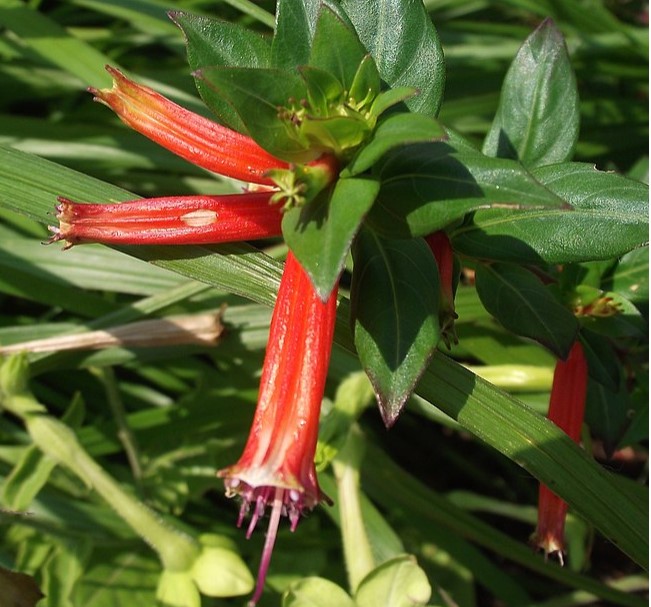
Firecracker plant (Cuphea ignea), also called cigar plant, is a small evergreen shrub from Mexico grown for its flowers: slim scarlet tubes about an inch long, each ending in a dark ring and a white rim, like a lit cigar with its ash. There are no showy petals; the color comes from the tubular calyx. Flowers appear one by one along the stems among small, glossy, lance-shaped leaves from late spring until frost, and all year in frost-free gardens.
The name causes some confusion. Russelia equisetiformis, a plant with rush-like stems, is also sold as firecracker plant, and "firecracker vine" usually means Spanish flag, an annual vine.
Hardiness
Cigar plant is fully at home only where frost is rare, in zones 10 and 11. University of Florida Extension rates it for zones 9b to 11, while Missouri Botanical Garden and NC State start it at zone 10. Frost kills the top growth, and in zone 9 plants often resprout from the roots after a light freeze but can be lost in a hard one. Elsewhere it is grown as a summer annual, reaching 1 to 2 feet tall and wide; where it is perennial it can grow to about 3 feet. Set plants out after your last frost, once the soil is warm (see our zip code lookup).
Growing firecracker plant
- Light: full sun to light shade. It handles heat well.
- Soil and water: well-drained soil. It tolerates short dry spells but flowers best with regular water during long droughts, and pots need watering more often.
- Feeding: in beds, little or none. In containers, a light liquid feed every few weeks keeps it blooming.
- Grooming: no deadheading needed, since spent flowers drop on their own. Pinch young plants to make them bushier, and shear back by a third in midsummer if they get leggy.
- Pests: few outdoors. Whiteflies and spider mites can show up indoors.
To keep a plant over winter in a cold climate, bring a container indoors to a sunny window before frost, or take 3- to 4-inch stem cuttings in late summer; they root readily.
Wildlife
Hummingbirds visit the flowers all season, and bees work them too. Butterflies stop by only occasionally.