Flowers ›
Joe Pye Weed
Eutrochium purpureum
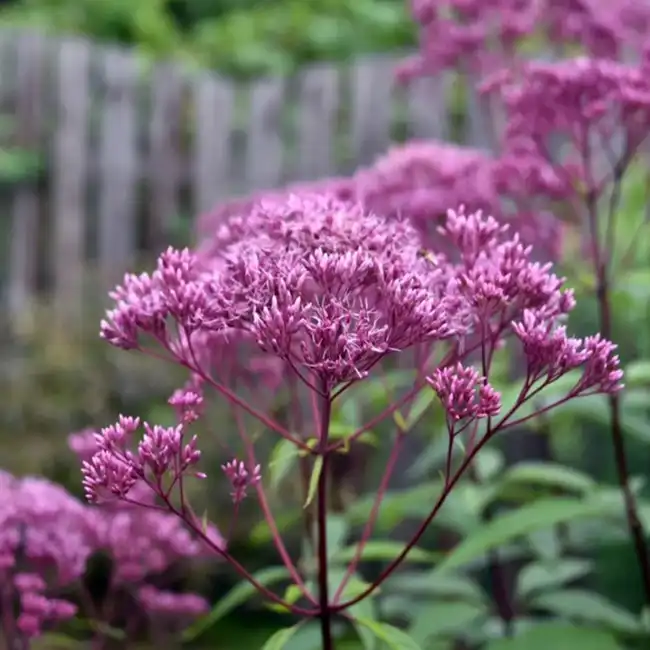
Joe Pye weed is the tall native perennial of late summer. Sturdy stems 4 to 7 feet tall carry whorls of three to five lance-shaped leaves, and from late July into September they are topped with big, domed clusters of small, fuzzy, mauve-pink flowers. The flower heads fade to tan and stand into winter.
The species profiled here is sweet Joe Pye weed (Eutrochium purpureum, formerly Eupatorium purpureum), named for the faint vanilla scent of its flowers. It has green stems that are purple at the leaf joints. Two close relatives are just as common in gardens: spotted Joe Pye weed (E. maculatum), with purple or purple-spotted stems and flatter flower heads, and hollow Joe Pye weed (E. fistulosum), the tallest of the three. All are native to eastern and central North America.
A butterfly plant
When Joe Pye weed is in bloom it is usually covered in butterflies: swallowtails, monarchs, fritillaries and skippers, along with bumblebees and many other bees. Monarchs passing through on their fall migration use it as a nectar stop. The flowers are too small to interest hummingbirds. Plant it with other late bloomers such as asters and goldenrod; see pollinator flowers for fall for more.
Growing Joe Pye weed
Light. Full sun to part shade. More sun means sturdier stems and more flowers.
Soil and water. Moist, rich soil is ideal. Sweet Joe Pye weed handles average garden soil and short dry spells better than its relatives, which want wet ground such as rain gardens and pond edges. In a drought, water deeply; dry plants drop their lower leaves.
Hardiness and spacing. Zones 4 to 9. Space plants 2 to 3 feet apart, at the back of a border or the middle of a large bed.
Controlling height. To get a shorter, bushier plant with more but smaller flower heads, cut the stems back by about half in late spring, by early June. Bloom comes a week or two later. Or grow a compact cultivar: 'Little Joe' and 'Baby Joe' (E. dubium) stay about 2 to 4 feet tall.
Feeding and staking. Compost in spring is enough. Plants in full sun rarely need staking; in shade or very rich soil they may lean.
Winter and spring. Leave the stems standing over winter for their seed heads and for insects that shelter in them, then cut them to the ground in early spring. New growth is late to appear, so don't give up on it in April.
Dividing. Clumps get large and woody. Divide every few years in early spring with a sharp spade. It also self-seeds a little.
Problems are few: powdery mildew or leaf spots on drought-stressed plants. Deer usually leave it alone. In a rain garden it pairs well with swamp milkweed and cardinal flower.