Flowers ›
Devil's Tobacco
Lobelia tupa
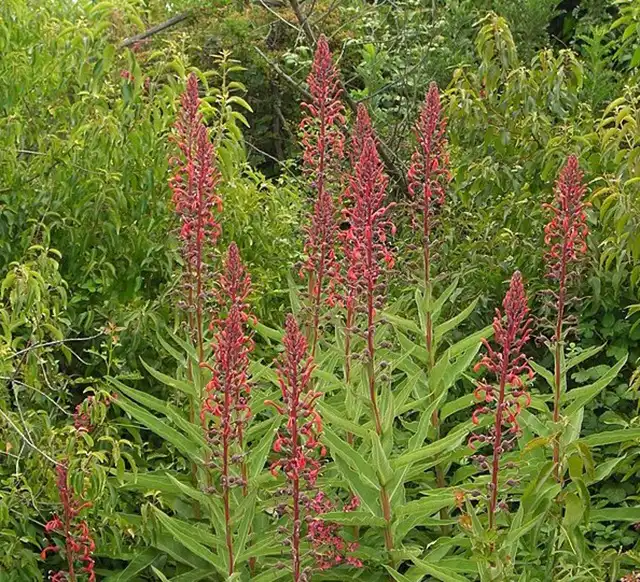
Devil's tobacco (Lobelia tupa) is a large perennial lobelia from Chile, a relative of our native cardinal flower built on a much bigger scale. Thick stems grow 4 to 6 feet tall, occasionally 8, clothed in large, soft, gray-green leaves with a felted surface. From late summer into fall the upper part of each stem becomes a spike of curved, tubular flowers in brick red to scarlet. Birds pollinate it in Chile, and in North American gardens hummingbirds find it quickly.
Hardiness
It is hardy to about zone 8, and some gardeners keep it through zone 7 winters with sharp drainage and a thick mulch over the crown. In colder areas, grow it in a large container and move it to a frost-free garage or greenhouse for winter, keeping the soil barely moist, or treat it as an annual. Check your zone with our zip code lookup.
Growing devil's tobacco
- Light: full sun; a little afternoon shade is fine in hot climates.
- Soil: fertile, well-drained soil. Keep it moist during the growing season; established plants tolerate some dry weather. Wet soil in winter is the most common cause of losses.
- Spacing: give each plant about 3 feet; it gets big.
- Winter care: at the cold end of its range, mulch the crown after the first frost. Cut the dead stems down in late fall or early spring.
Handle with care
Like other lobelias it contains toxic alkaloids, and nothing about the plant is safe to smoke or eat, whatever the common name suggests. The milky sap can irritate skin and eyes, so wear gloves when you cut it back. Deer and rabbits generally leave it alone.