Flowers ›
Cardinal Flower
Lobelia cardinalis
- Life cycle
- Perennial
- Growth form
- Upright
- Hardy to zone
- 3
- Light
- Part Shade
- Moisture
- Moist
- Soil
- Loam
- Height
- 38 in (3.2 ft)
- Spread
- 18 in
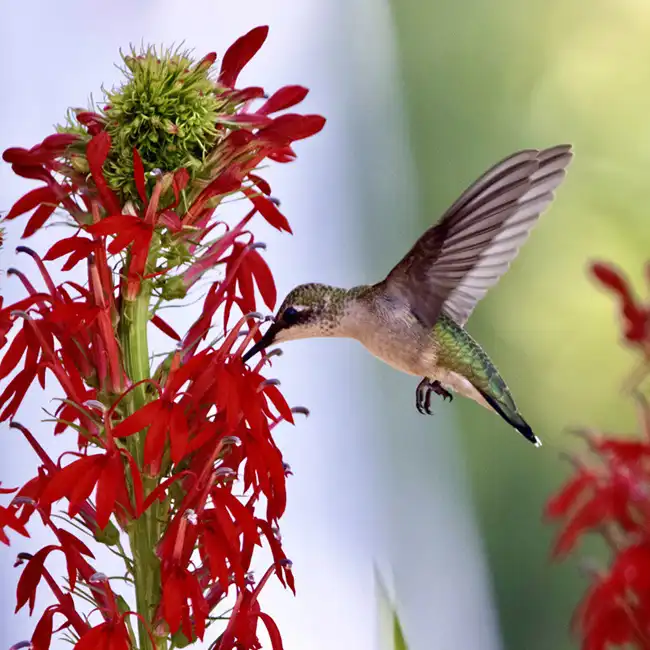
Cardinal flower (Lobelia cardinalis) is a native perennial of stream banks, wet meadows and swamp edges across much of North America. From midsummer into early fall, usually July to September, it sends up spikes 2 to 4 feet tall lined with brilliant red, tubular flowers above a low rosette of lance-shaped leaves, often tinged bronze.
A hummingbird flower
The flowers are built for hummingbirds. The long red tube holds nectar that few insects can reach, and the column of stamens arches over the opening to dust the bird's forehead with pollen as it feeds. Large swallowtails visit occasionally, but ruby-throated hummingbirds are the main pollinators, and the bloom lines up with their late-summer migration. Our article on cardinal flowers for hummingbirds covers growing them in pots near a deck or patio.
Growing cardinal flower
Moisture comes first. It needs soil that stays consistently moist to wet and is rich in organic matter: a pond or stream edge, a rain garden, a low spot, or a container you water often. Plants that dry out in summer usually die.
Light. Part shade is safest. It grows in full sun only where the soil never dries, and in hot-summer regions it does best with afternoon shade.
Hardiness and spacing. Zones 3 to 9. Space plants about a foot apart.
Keep it going. Individual plants are short-lived, often only a few years, but each one forms new basal rosettes around the old stem, and plants self-seed into bare, moist soil. Two habits help:
- Don't bury the rosettes under thick mulch or a mat of wet leaves over winter. They need air and rot easily. A light, open cover is fine in cold zones.
- Every couple of years, lift the clump in spring and replant the new rosettes separately.
From seed. The seed is dust-fine and needs light to germinate. Sow it on the surface outdoors in fall, or give it about two months of cold, moist stratification in the refrigerator before sowing indoors in late winter.
Companions and cautions
In a rain garden or along a pond it pairs well with swamp milkweed, Joe Pye weed and its blue cousin, great blue lobelia (Lobelia siphilitica).
Deer usually avoid it. All parts contain toxic alkaloids, so it should not be eaten.