Flowers ›
Anise Hyssop
Agastache foeniculum
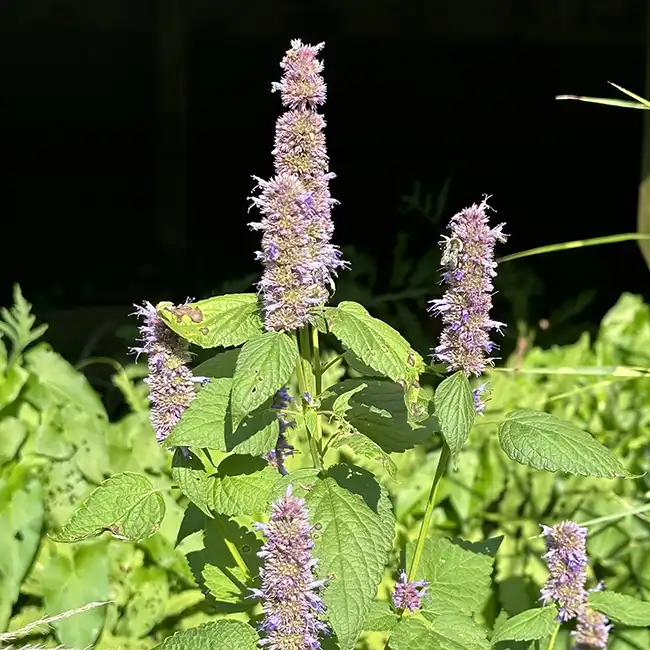
Anise hyssop (Agastache foeniculum) is a native perennial of the prairies and open woods of the northern Great Plains and south-central Canada. Despite the name it is neither an anise nor a true hyssop. It belongs to the mint family, square stems and all, and a crushed leaf smells strongly of sweet licorice.
Plants grow 2 to 4 feet tall and about 18 inches wide, with toothed, heart- to lance-shaped leaves that are often whitish underneath. From midsummer into early fall each stem ends in a dense spike, 3 to 4 inches long, of small lavender-blue flowers. The spikes keep their color for weeks, and the dry seed heads stay upright into winter.
Growing anise hyssop
- Light: full sun gives the sturdiest stems and the most flowers. It tolerates light shade but leans and blooms less.
- Soil: any well-drained soil, from sandy to clay loam. Soggy winter soil kills it faster than cold does. Skip the fertilizer; rich soil makes floppy plants.
- Water: water new plants through their first summer. Established plants handle dry spells well.
- Hardiness: zones 3 to 8.
- Spacing: 18 to 24 inches apart.
Individual plants are short-lived, often three or four years, but anise hyssop self-seeds enough to keep a patch going. Pull extra seedlings in spring, or cut off the spikes before the seed ripens if you don't want volunteers. Otherwise leave the seed heads standing over winter for goldfinches and cut the old stems to the ground in early spring. Seed started indoors in late winter will often flower the first summer.
Pollinators and kitchen use
This is one of the best bee plants you can grow. Honeybees and bumblebees work the spikes from morning to dusk, butterflies visit regularly, and hummingbirds stop by now and then, though the orange and pink hummingbird mints are far better for them. Deer and rabbits usually leave the aromatic foliage alone. For more late-blooming bee plants, see pollinator flowers for fall.
The leaves and flowers are edible with a mild anise flavor. Steep fresh or dried leaves for tea, or scatter the flowers over salads and desserts. It fits as easily in an herb garden as in a flower border.