Growing Red Cabbage
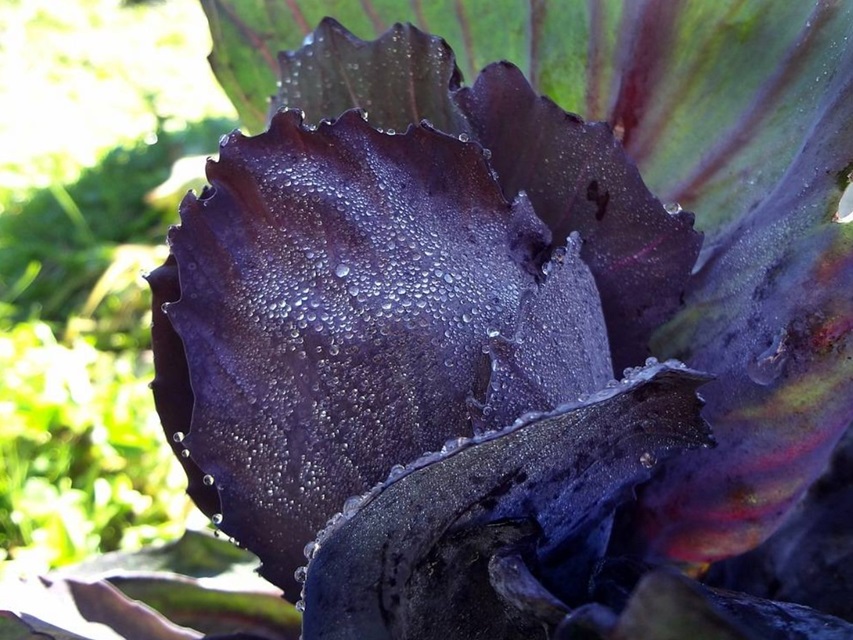
Red cabbage is the same plant as green cabbage (Brassica oleracea var. capitata), with leaves colored purple-red by anthocyanin pigments. In the garden it behaves much like green cabbage, with a few differences: most red varieties are slower to mature, the heads are usually smaller and denser, and the leaves are thicker and waxier. The color is usually deepest in heads that mature in cool weather, which is one more reason to grow it as a fall crop. For the general method, including how to prevent split heads, see growing cabbage in the home garden.
Varieties
| Variety | Days from transplant (approx.) | Notes |
|---|---|---|
| 'Red Express' | 60–65 | Early, compact, open-pollinated; bred for short northern seasons. Good for spring. |
| 'Red Acre' | 75–80 | Compact plants with small, firm round heads; a long-time home-garden standard. |
| 'Ruby Perfection' | About 85 | Hybrid with uniform, dense heads that store well. |
| 'Mammoth Red Rock' | About 100 | Heirloom with large heads; a fall crop for storage and pickling. |
Planting
When to plant
Look up your frost dates with the zone and frost date lookup.
- Spring: start seeds indoors 4 to 6 weeks before transplanting, and set hardened transplants out 2 to 4 weeks before your last frost. Choose an early variety so the heads form before summer heat.
- Fall: count back from your first fall frost by the variety's days to maturity plus about two weeks. Because red cabbage is slow, this usually means starting seed in late spring or early summer and transplanting in early to midsummer, not sowing in late summer.
Soil requirements
Red cabbage needs full sun and fertile, well-drained soil that holds moisture, with a pH of 6.0 to 7.5. Work in compost or well-rotted manure before planting (2 to 3 inches for a new bed, no more than an inch on a bed that gets it every year), and choose a bed where no cabbage-family crop has grown for three to four years.
Planting instructions
- Starting indoors: sow seeds ¼ inch deep in seed-starting mix, in soil around 70–80°F, under grow lights or in a bright window. Seedlings appear within a week.
- Transplanting: set plants out when they have four to six true leaves and are 4 to 6 inches tall. Do not let them sit in small pots until root-bound; stressed transplants may form small, premature heads. Space plants 12 to 18 inches apart in rows 24 to 36 inches apart.
- Direct sowing: for a fall crop, you can sow ¼ inch deep in the garden in early summer and thin to the same spacing.
Water evenly, about 1 to 1.5 inches a week, and mulch to keep the soil cool.
Fertilization requirements
Mix compost or a balanced fertilizer into the bed before planting. Side-dress with a nitrogen fertilizer or compost about three weeks after transplanting, and once more about a month later if growth is slow. Stop feeding when heads start to firm up; late nitrogen encourages loose heads and splitting.
When to harvest
Red cabbage is usually ready 70 to 100 days after transplanting, depending on the variety. Harvest when the head feels hard all the way through, whatever its size. Cut it with a sharp knife, leaving the stalk and outer leaves; early varieties may grow small secondary heads from the stump. Mature heads tolerate frosts into the low 20s °F, but harvest them before a hard freeze. Stored at 32–40°F with high humidity, the dense heads keep for weeks to months.
In the kitchen, the color acts as a pH indicator: red cabbage turns blue or greenish when cooked in alkaline water or with baking soda, and stays bright red with a splash of vinegar or with apples.
Companion plants
The claims that dill, mint, rosemary, potatoes or marigolds repel cabbage pests have little evidence behind them, and mint spreads aggressively if planted in the ground. In trials, strong-smelling plants were no better than any other green plant at keeping pests off brassicas; the evidence is summarized under companion plants in growing green cabbage. Flowering dill, cilantro or sweet alyssum nearby do feed the parasitic wasps and hoverflies that attack cabbage worms and aphids, which is a help but not a control on its own. Nasturtiums attract aphids and cabbage white butterflies, so they work better as a decoy at a distance than as a neighbor.
Pest management
Red cabbage gets the same pests as green: cabbage worms and loopers, cabbage aphids, flea beetles, cabbage root maggots, and slugs in damp weather.
- Row covers or insect netting: the most effective step. Put them on at transplanting and seal the edges to keep out egg-laying butterflies, moths and flies. Use them on a bed where no cabbage-family crop grew last year, or root maggot flies that overwintered in the soil will hatch under the cover.
- Regular checks: look under leaves and into forming heads once or twice a week, and hand-pick caterpillars and eggs.
- Bt: Bacillus thuringiensis var. kurstaki controls caterpillars and does not harm bees or other beneficial insects. It works on small caterpillars that eat the sprayed leaf, so spray when you first see them. See cabbage white butterfly.
- Aphids: wash them off with a strong spray of water or use insecticidal soap. Lady beetles and lacewings help if you avoid broad-spectrum sprays.