Growing Green Cabbage
Green cabbage (Brassica oleracea var. capitata) is the classic smooth-leaved cabbage, and it offers the widest choice of varieties of any cabbage type: small, quick heads for spring, and big, dense storage heads for fall, winter keeping and sauerkraut. Picking the right variety for the season is the main decision. This page focuses on that; the full growing method, including how to keep heads from splitting, is in growing cabbage in the home garden.
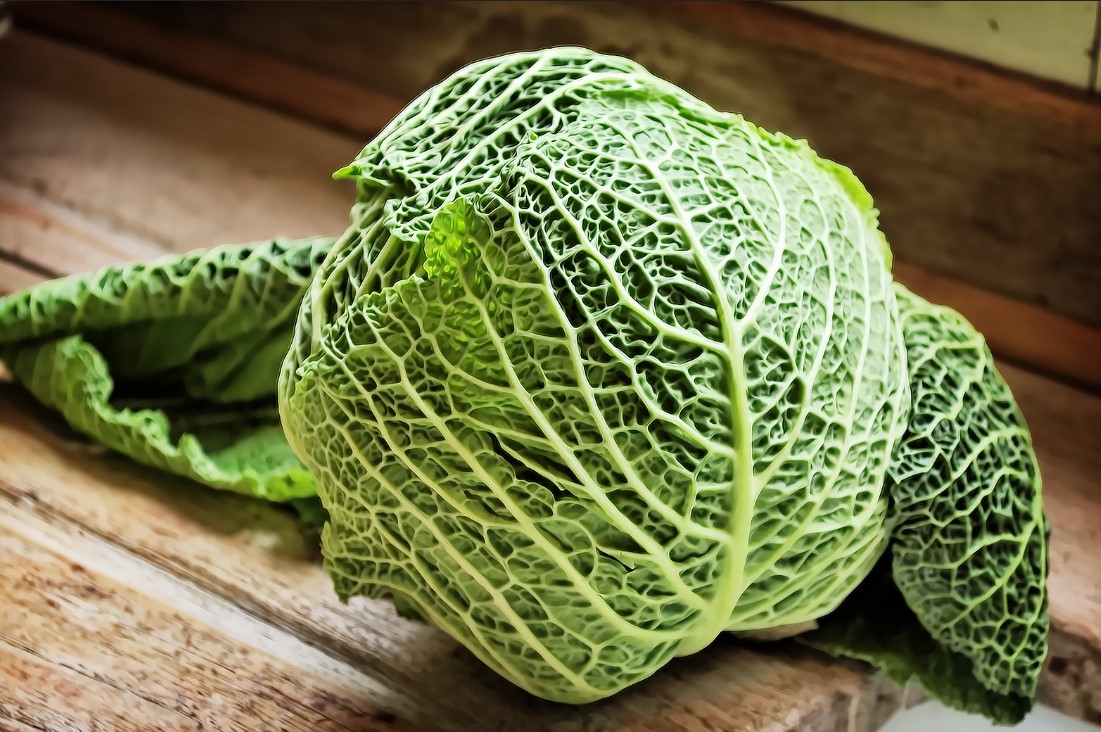
Varieties by season
| Variety | Type | Days from transplant (approx.) | Best use |
|---|---|---|---|
| 'Golden Acre' | Early, small round heads | 60–65 | Spring planting; compact plants that can be spaced closely |
| 'Early Jersey Wakefield' | Early heirloom, pointed (conical) heads | 60–70 | Spring planting; tender, sweet heads |
| 'Copenhagen Market' | Early, round heads | 65–75 | Spring or early fall |
| 'Danish Ballhead' | Late, very dense round heads | 100+ | Fall crop for storage and sauerkraut |
| 'Late Flat Dutch' | Late, large flattened heads | 100+ | Fall crop; big heads for kraut and storage |
Early varieties mature before summer heat but do not store long and tend to split if left in the garden. Late varieties need a long, cool season, so they are started in late spring or early summer for fall harvest, and they keep for months.
Planting green cabbage
Soil requirements
Green cabbage grows best in fertile, well-drained soil that holds moisture, with a pH of 6.0 to 7.5. Work in compost or well-rotted manure before planting (2 to 3 inches for a new bed, no more than an inch on a bed that gets it every year). Choose a spot in full sun where no cabbage-family crop has grown for the last three to four years.
Fertilization requirements
Cabbage is a heavy feeder, especially for nitrogen. Before planting, mix in a complete fertilizer such as 10-10-10 at the rate on the label, or as a soil test recommends. About three weeks after transplanting, when plants start growing quickly, side-dress with a nitrogen fertilizer or compost. Stop feeding once heads begin to firm up, since late nitrogen encourages loose heads and splitting.
When to plant
Look up your frost dates with the zone and frost date lookup.
- Spring crop (early varieties): start seeds indoors 4 to 6 weeks before transplanting, and set hardened transplants out 2 to 4 weeks before your last frost.
- Fall and storage crop (late varieties): count back from your first fall frost by the variety's days to maturity plus about two weeks. For 100-day storage cabbages, that usually means starting seed in late spring or early summer and transplanting in early to midsummer.
Space early varieties about 12 inches apart and late varieties 18 to 24 inches apart, in rows 24 to 36 inches apart.
When to harvest
Harvest when the head feels hard all the way through when you squeeze it. Size varies by variety, so firmness is the better guide. Cut the head with a sharp knife, leaving the stalk and outer leaves in the ground. Early varieties often produce several small secondary heads from the stump a few weeks later. If heavy rain is coming and mature heads are at risk of splitting, either harvest them or give each plant a quarter twist to break some roots and slow water uptake.
Late varieties tolerate frosts into the low 20s °F, so they can stay in the garden until you are ready, but bring them in before a hard freeze. Store them at 32–40°F with high humidity.
Companion plants
Most companion-planting advice for cabbage, such as claims that certain herbs repel cabbage pests or that tomatoes or strawberries stunt it, has little evidence behind it.
The idea that strong-smelling plants hide cabbage from its pests has been tested. In trials at Horticulture Research International in England, mint, sage, thyme, onion, marigold and curry plant were no better than any other green plant at keeping cabbage root flies off brassicas. What did reduce egg-laying was having the cabbage surrounded by other green leaves instead of bare soil: 36 percent of the flies laid eggs beside cabbages in bare soil, but only 7 percent beside cabbages growing in clover, because the flies kept landing on the wrong plant and giving up. Green paper models worked as well as real plants, so smell had nothing to do with it. The catch for gardeners is that a living cover thick enough to do this also competes with the cabbage for water and nutrients.
Two things are worth doing:
- Flowering plants for beneficial insects. Dill, cilantro and sweet alyssum in bloom near the cabbage bed feed the small parasitic wasps and hoverflies that attack cabbage worms and aphids. Treat them as a supplement, not a control: in a University of New Hampshire trial, flowers planted among Brussels sprouts drew more hoverflies and parasitic wasps but did not reduce the cabbage aphids on the crop.
- Quick interplanted crops. Lettuce, spinach or radishes can use the space between young cabbage plants and be harvested before the cabbages fill in.
Pest management
The main pests of green cabbage are cabbage worms and loopers (green caterpillars that chew holes and bore into heads), cabbage aphids, flea beetles on young transplants, and cabbage root maggots.
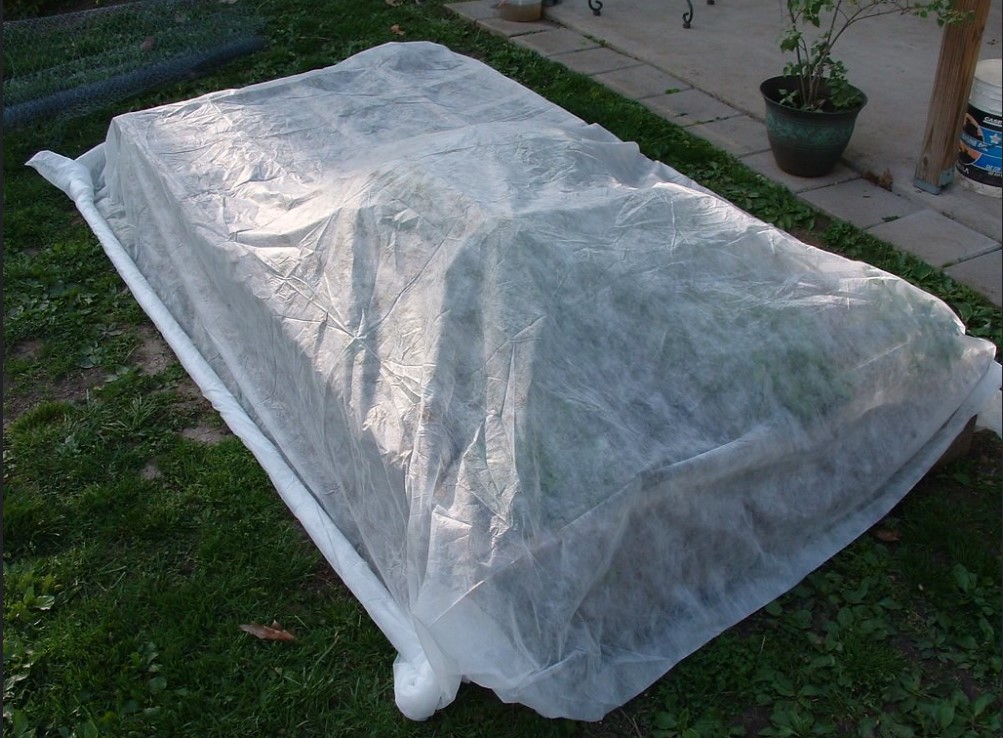
- Floating row covers or insect netting: put on at transplanting and sealed at the edges, they keep out the egg-laying butterflies, moths and flies. Cabbage does not need pollinators, so the cover can stay on all season. Use covers on a bed where no cabbage-family crop grew last year; root maggot flies that overwintered in the soil would otherwise hatch under the cover.
- Handpicking: check the undersides of leaves and the forming heads once or twice a week, and crush eggs and caterpillars.
- Bt: Bacillus thuringiensis var. kurstaki controls caterpillars and nothing else, so it spares bees and beneficial insects. It works on small caterpillars that eat the sprayed leaf, so spray when you first see them and cover the undersides of the leaves. See cabbage white butterfly.
- Natural predators: lady beetles, lacewings and parasitic wasps do much of the work if you avoid broad-spectrum insecticides.
- Crop rotation: move cabbage and its relatives to a new bed each year, so that none returns to the same spot for three to four years. That limits black rot and the pests that overwinter in the soil. It is not long enough to clear clubroot, whose spores last for many years; see the family's shared diseases.
Sources
- Insects can see clearly now the weeds have gone, Finch and Collier, Biologist 50(3), 2003
- Companion planting research, Warwick Crop Centre, University of Warwick
- Research report: managing cabbage aphid in Brussels sprout, 2016, University of New Hampshire Cooperative Extension, 2016
- Root maggots, University of Minnesota Extension