Growing Beet Greens in the Home Garden
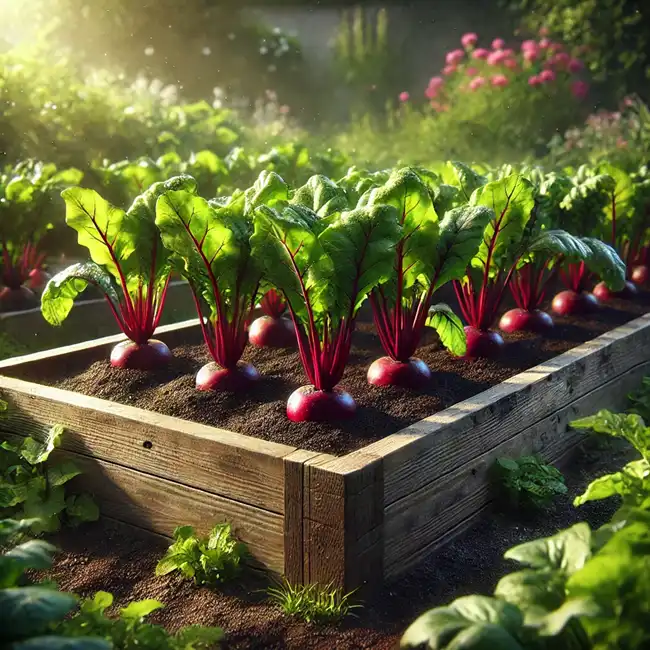
Beet greens are the leafy tops of the beet plant (Beta vulgaris). They taste like a milder, earthier Swiss chard, which makes sense: chard is the same species, bred for leaves instead of roots. You can grow beets just for greens, sown thickly and cut young, or grow them for roots and take some leaves along the way. This page covers growing for the greens; for roots, see growing beets.
Varieties for greens
Any beet has edible leaves, but a few are especially good for them:
- 'Bull's Blood': deep red-purple leaves, often grown mainly for baby greens and microgreens. The color is darkest in full sun.
- 'Early Wonder Tall Top': an old variety with tall, abundant green tops and red veins, good for both greens and early roots.
- 'Lutz Green Leaf' (also sold as 'Winter Keeper'): large, glossy green tops on a big storage beet.
Standard root varieties such as 'Detroit Dark Red' also give plenty of greens.
Planting
Beets tolerate frost, so you do not need to wait for the last frost date. Sow 2 to 4 weeks before the last spring frost, once the soil has warmed to at least 45–50°F, and again from late summer for a fall crop. Germination is slow and patchy in cold soil; soaking the seed for a few hours before sowing helps. Check your dates with the zone and frost date lookup.
Grow beets in full sun (they tolerate light shade when grown for greens) in loose, well-drained soil with plenty of compost and a pH of about 6.5 to 7.5. Sow seed ½ inch deep. What looks like a single beet seed is actually a corky cluster holding several seeds, so each one usually sends up two to four seedlings.
- Greens only: sow about ½ to 1 inch apart in rows or a wide band and do not bother thinning. Cut the planting as baby greens.
- Greens and roots: sow 1 inch apart and thin to 3 to 4 inches. Snip extra seedlings at the soil line rather than pulling them, so you do not disturb their neighbors. The thinnings are your first harvest.
Sow a new row every three weeks or so through spring and again in late summer for a continuous supply. Beets handle warm weather better than spinach, but summer leaves are tougher and more prone to leaf spot.
Care
Keep the soil evenly moist; dry soil makes the leaves tough and the roots woody. Beets are moderate feeders. Compost worked in before planting is usually enough, and too much nitrogen gives you lush tops at the expense of roots.
Harvesting
Baby greens are ready about 4 weeks after sowing, when the leaves are 3 to 4 inches long; use them raw in salads. Larger leaves, 6 inches and up, are better cooked like chard, stems and all. Cut the outer leaves and leave the center to keep growing.
If you also want roots, take only one or two leaves from each plant at a time, and never more than about a third of the foliage. The leaves feed the root, and stripping them stunts it. When you pull beets for roots, twist off the tops right away (leave an inch of stem on the root) and use the greens within a few days; the roots keep for weeks, the leaves do not.
Pests and diseases
- Leaf miners: fly larvae that tunnel inside the leaves, leaving pale, blotchy patches. Pick off mined leaves and cover new plantings with row cover. See leaf miners.
- Flea beetles: small round holes in young leaves. Row cover at sowing time prevents most damage.
- Cercospora leaf spot: small round tan spots with reddish-purple borders, worst in warm, humid weather. Remove spotted leaves, water at the soil instead of overhead, and rotate beets, chard and spinach to a new spot each year.
Like spinach and chard, beet greens are a good source of vitamins K and A, and they are high in oxalates. That matters if you are prone to calcium oxalate kidney stones or are counting on the greens for calcium; the spinach page explains why and how boiling lowers the oxalate.