Flowers ›
Astilbe
Astilbe x arendsii
- Life cycle
- Perennial
- Growth form
- Mounding
- Hardiness zones
- 3–9
- Light
- Part Shade
- Moisture
- Moist
- Soil
- Loam
- Height
- 36 in (3 ft)
- Spread
- 24 in (2 ft)
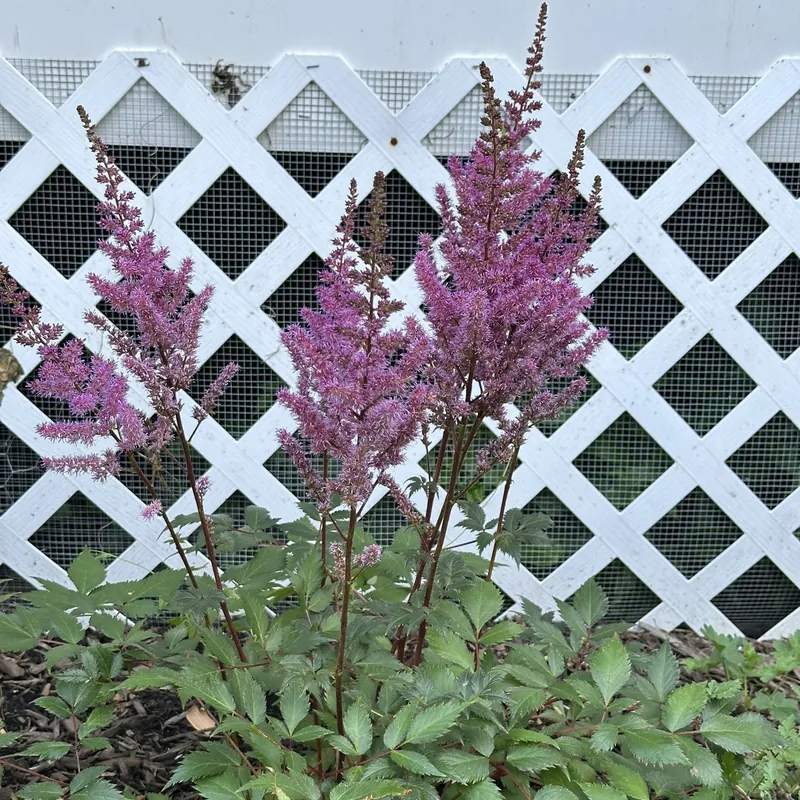
Astilbe, also called false spirea, is one of the most dependable flowering perennials for shade. Most plants sold in garden centers are hybrids grouped as Astilbe × arendsii, bred in Germany by George Arends in the 1920s from species native to China, Japan and Korea. They form clumps of glossy, fern-like leaves, green, dark green or bronze, and in late spring and summer send up stiff, feathery plumes packed with hundreds of tiny flowers in red, pink, peach, lavender, purple or white. Most hybrids grow 2 to 3 feet tall and 1½ to 2 feet wide; dwarf types stay under a foot.
Astilbe brings color to the shady, damp corners where many flowering plants struggle. The plumes are good for cutting and drying, and the faded flower heads turn brown and stay upright into winter. By choosing early, mid and late varieties, you can have plumes in flower from late spring well into summer.
Planting
- Light: part shade is ideal. It can take more sun only if the soil stays constantly moist; in hot, dry sun the leaves scorch.
- Soil: rich in organic matter, moist but not waterlogged. Work in compost before planting. See building healthy soil.
- Hardiness: NC State Extension and Clemson Extension list zones 3 to 9. In hot summers the leaves decline unless the soil is kept moist, so shade and steady water matter more the farther south you garden.
- When: spring or early fall.
Astilbe also suits the damp ground near a pond or stream and wet spots in a woodland garden, as long as the crown is not sitting in standing water.
Water is the key
Astilbe needs more water than most perennials. The most common problem is browning, crispy leaf edges in midsummer, which is caused by dry soil and too much sun, not by disease. Water deeply and regularly through the first summer, and in later years give a long soak whenever the top inch of soil is dry. Clemson Extension notes that the leaves brown at the edges when plants dry out and may go dormant in a drought.
A 2-inch layer of compost or shredded bark mulch helps keep the roots cool and moist. Good soil usually supplies enough nutrients, though a light feeding in spring can help in poor ground.
Care
- Deadheading: not needed. Faded plumes do not rebloom, but they look good through fall and winter and give some structure to a bare shade bed.
- Cutting back: cut last year's stems and leaves to the ground in late winter or early spring, before new growth starts. Leaving them up over winter also gives shelter to small insects; see leaving stems and leaves for overwintering insects.
- Dividing: clumps get crowded and flower less over time. Divide every three or four years, in early spring or in fall, cutting the woody crown into pieces with a sharp spade.
Pollinators
NC State Extension lists astilbe as attracting butterflies. The plumes of tiny, open flowers are not a hummingbird flower; hummingbirds favor long, tubular blooms. If you want a native astilbe with more value for local insects, look for Appalachian false goatsbeard (Astilbe biternata), which Clemson Extension notes is native to the southeastern United States.
Design ideas
- Shade borders: plant it in drifts with hostas, ferns, bleeding heart and masterwort for contrasting leaf shapes and a long season of flowers.
- Woodland edges: white and pale pink varieties brighten dark spots under trees.
- Wet areas: use it along streams, ponds and rain gardens where the soil stays moist.
- Containers: dwarf varieties do well in pots if watered often; see container gardening.
Varieties
NC State Extension lists many A. × arendsii cultivars, including:
- 'Fanal': deep red flowers and dark green leaves.
- 'Bridal Veil': white, fading to cream.
- 'Diamant' ('Diamond') and 'Weisse Gloria' ('White Glory'): pure white.
- 'Erika': pink, with bronze-tinted leaves.
- 'Amethyst': lilac-purple.
- 'Grete Pungel': peach-pink.
- 'Venus': vivid pink.
Problems
Astilbe has no serious insect or disease problems in a good site. Japanese beetles, whiteflies and black vine weevil may feed on the leaves, and powdery mildew, wilt and leaf spots can occur. Leaf scorch from heat and dry soil is far more common than any pest. Deer seldom do severe damage: the Rutgers deer resistance list rates astilbe "seldom severely damaged," and NC State Extension lists it as resistant to deer and rabbits. See the deer garden page for more.
Sources
- Astilbe x arendsii, NC State Extension Gardener Plant Toolbox, accessed 2026: parentage and breeding, size, flower colors, bloom season, culture, zones, attracts butterflies, deer and rabbit resistance, pests and diseases, division, cultivars
- How to grow and care for astilbe, Clemson Cooperative Extension Home and Garden Information Center, accessed 2026: watering, browning and summer dormancy, cutting back, division timing, Astilbe biternata
- How to grow astilbe, Royal Horticultural Society, accessed 2026: site, watering, mulching, division, seed heads, scorch, vine weevil
- Landscape plants rated by deer resistance (E271), Rutgers Cooperative Extension, accessed 2026: deer rating