How to Know When to Harvest Sweet Potatoes
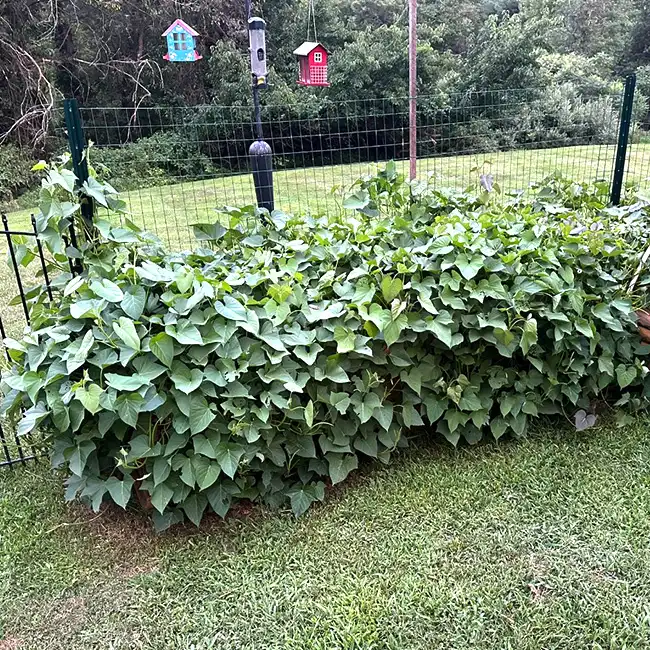
Most sweet potato varieties are ready 90 to 120 days after you set out the slips. The calendar is your main guide, a test dig confirms it, and cold weather sets the deadline. For planting and growing, see growing sweet potatoes.
Count the days
Write down the date you planted, and look up the days to maturity for your variety from the slip supplier or catalog. Fast varieties such as 'Georgia Jet' are at the early end of the range. As long as the weather stays warm, the roots keep growing, so a later harvest gives bigger roots. Roots left too long can grow very large and crack, and they spend more time exposed to wireworms and other soil pests.
Do a test dig
Once you reach the expected maturity date, dig gently by hand at the edge of one plant and uncover a few roots. If most of them are a usable size, roughly 2 to 3 inches across, the crop is ready. If they are still thin and stringy, give them another week or two and check again. Cover the roots back up if you're waiting.
Don't rely on yellow vines
Sweet potato vines may yellow somewhat late in the season, but in many gardens, especially in the South, they stay green until frost. Yellowing leaves alone don't tell you the roots are ready, and green vines don't mean they aren't.
Watch the temperature
The deadline is set by cold, not by the plant. Dig before the soil cools below about 55°F, and certainly before frost. Roots that sit in soil below 50°F can suffer chilling injury: they may look fine at harvest but develop hard centers, store poorly and rot. If a frost blackens the vines before you've dug, cut the vines off at soil level and dig right away so decay doesn't spread down into the roots. Use the zone and frost date lookup to find your average first fall frost.
How to dig
- Pick a dry day when the soil is moist but not wet; wet soil means more skinned and rotting roots.
- Cut or pull the vines first so you can see where each plant's crown is.
- Start digging 12 to 18 inches from the crown with a spading fork, and work inward. The roots cluster under the crown but can spread out and down.
- Lift the soil and pull the roots out by hand.
Fresh skins scrape and bruise very easily, so handle the roots gently, don't toss them into a bin, and don't wash them. Let them dry on the soil surface for an hour or two on a mild day, but don't leave them in hot sun or out overnight in cold weather. Set aside cut or bruised roots to eat first.
Cure, then wait
Freshly dug sweet potatoes are starchy and not very sweet. Cure them for 7 to 10 days at about 85°F and 80 to 90 percent humidity. Curing heals small wounds, toughens the skin and begins turning starch into sugar. At home, a small room with a space heater and a pan of water works, or boxes kept in a warm spot such as near a furnace and loosely covered to hold in humidity.
After curing, store them in the dark at 55°F to 60°F. Don't refrigerate them. They taste best after a few weeks in storage, and well-cured sweet potatoes keep for months.